Conference Summary
The Leverhulme Wildfires Summer Conference 2026 brings together researchers, policymakers, practitioners and other experts from diverse disciplines to share our understanding of landscape fires, their drivers and impacts – and explore how societies can live with fires in a rapidly changing Earth system.
Through a mix of presentations, panel discussions, workshops and interactive sessions, participants will examine the drivers and impacts of changing fire regimes and explore how scientific insight can better inform action. The programme highlights emerging approaches to proactive preparedness, advances in fire detection and prediction, and the need for inclusive and equitable fire management that integrates scientific, Indigenous and practitioner knowledge. It also considers how adaptive policies, governance arrangements and economic incentives can support more resilient landscapes and communities.
By fostering dialogue across disciplines and knowledge systems, the conference aims to identify practical pathways for integrating research, policy and management in order to navigate the complex ecological and societal challenges posed by fire.
Read below for information on:
- ???? Conference Themes
- ???? Full Programme and Agenda
- ???? Wildfire Art Exhibition
- ???? Pizza and Movie Night
- ???? Photography Competition (Wildfires Research Through the Lens II)
- ???? Registration [Registration closed] and BBQ dinner [booking closed]
- ???? International Travel Bursary [Call closed]
- ???? Call For Abstracts [Call closed]
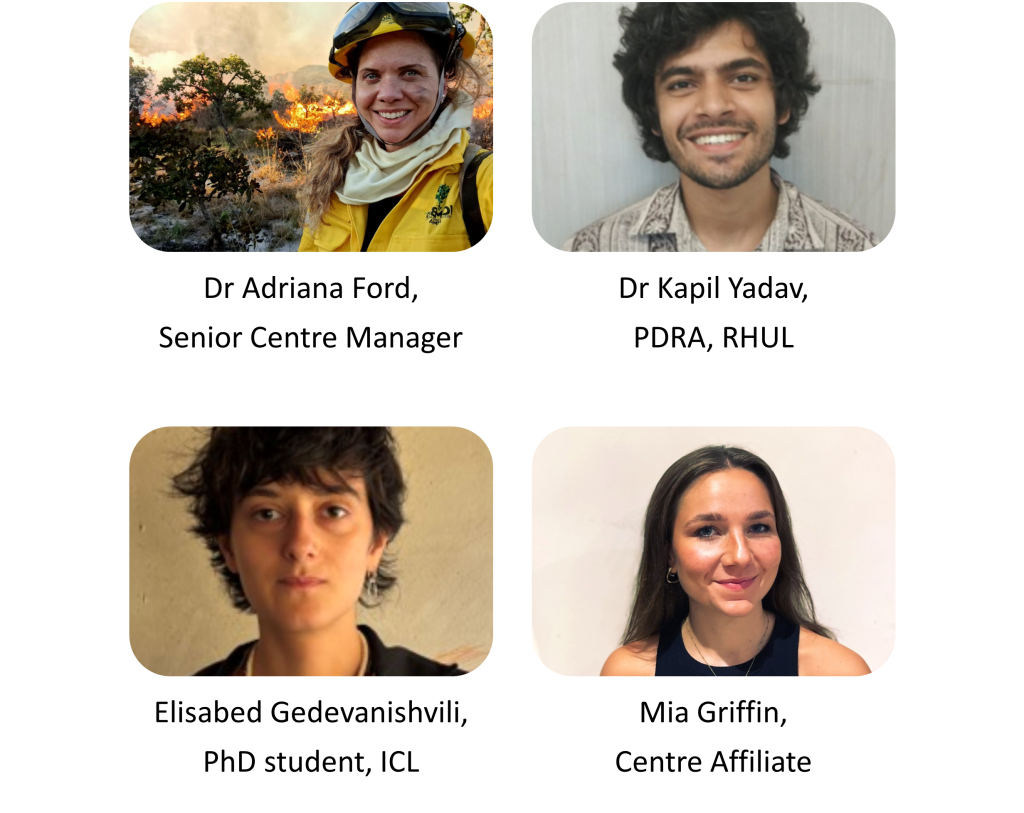
- ✉️ Organising Committee and Contact Information
Conference Themes
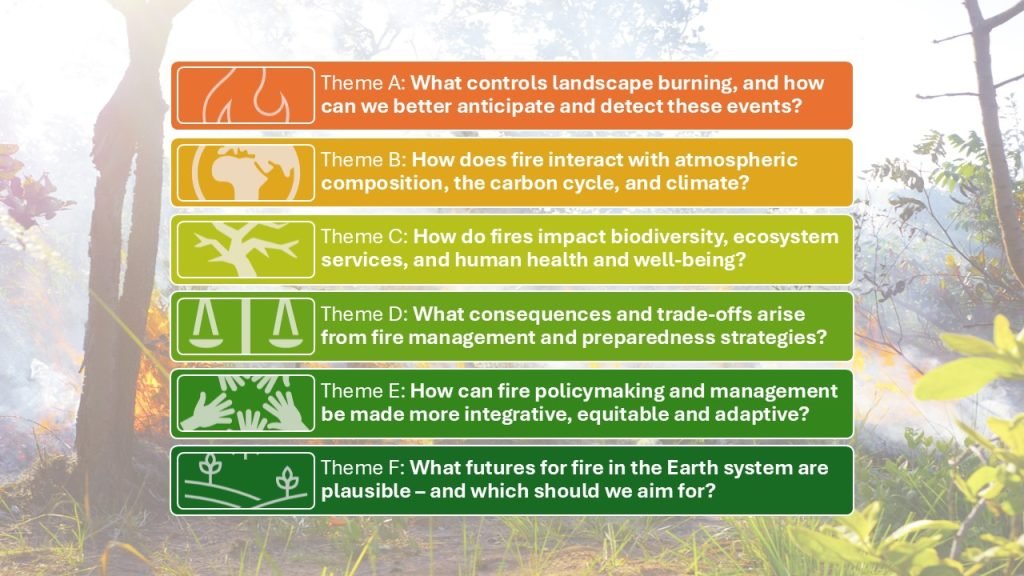
Theme A: What controls landscape burning, and how can we better anticipate and detect these events?
What are the relative roles of climate variability, long-term climate change, vegetation and fuel dynamics, and human activities in shaping fire regimes? This session explores drivers of fire across scales – from laboratory experiments and local landscape processes to global Earth system patterns – and considers how improved observation, detection, and predictive capabilities can support earlier awareness and proactive preparedness.
Theme B: How does fire interact with atmospheric composition, the carbon cycle, and climate?
As fire regimes intensify and shift, how do they alter atmospheric chemistry, air quality, carbon cycling, weather patterns, and long-term climate trajectories? And how do climate and weather, in turn, impact fire regimes? This session examines both present-day feedbacks and their implications for future Earth system dynamics, including how improved monitoring and modelling of fire–atmosphere interactions can enhance prediction and societal preparedness for emerging risks.
Theme C: How do fires impact biodiversity, ecosystem services, and human health and well-being?
Fires reshape habitats, species interactions, ecosystem services, and the health and livelihoods of communities. This session explores ecological and social consequences of fire, identifying vulnerabilities, thresholds, and opportunities for resilience, with particular attention to how impacts and risks are distributed across societies and landscapes.
Theme D: What consequences and trade-offs arise from fire management and preparedness strategies?
Efforts to suppress or control fire often have unexpected social and ecological knock‑on effects, producing difficult trade‑offs among competing policy objectives and social values. This session seeks to clarify those trade‑offs and evaluate the effectiveness of proactive preparedness and management approaches, and considers their implications for long-term environmental and societal resilience.
Theme E: How can fire policymaking and management be made more integrative, equitable and adaptive?
Fire policymaking must navigate competing goals, interests and knowledge systems in ways that are perceived as fair and that produce effective outcomes. This session explores how policymaking and management can better integrate ecological and social sciences, Indigenous and local knowledge, and practitioner expertise to improve decision‑making, legitimacy and measurable social and ecological outcomes, while also examining the role of adaptive governance and economic instruments, including markets, in shaping fire management strategies.
Theme F: What futures for fire in the Earth system are plausible – and which should we aim for?
This session examines plausible trajectories of fire–climate–landscape interaction under alternative climate change, economic development and governance scenarios. It considers how advances in prediction, preparedness, and adaptive policy frameworks could shape future fire regimes, and asks what normative visions of a “good” fire future (for safety, biodiversity, carbon and cultural livelihoods) should guide policy and how they might be achieved.