1. Seeing Fire: Perspectives through Art and Science (2020)
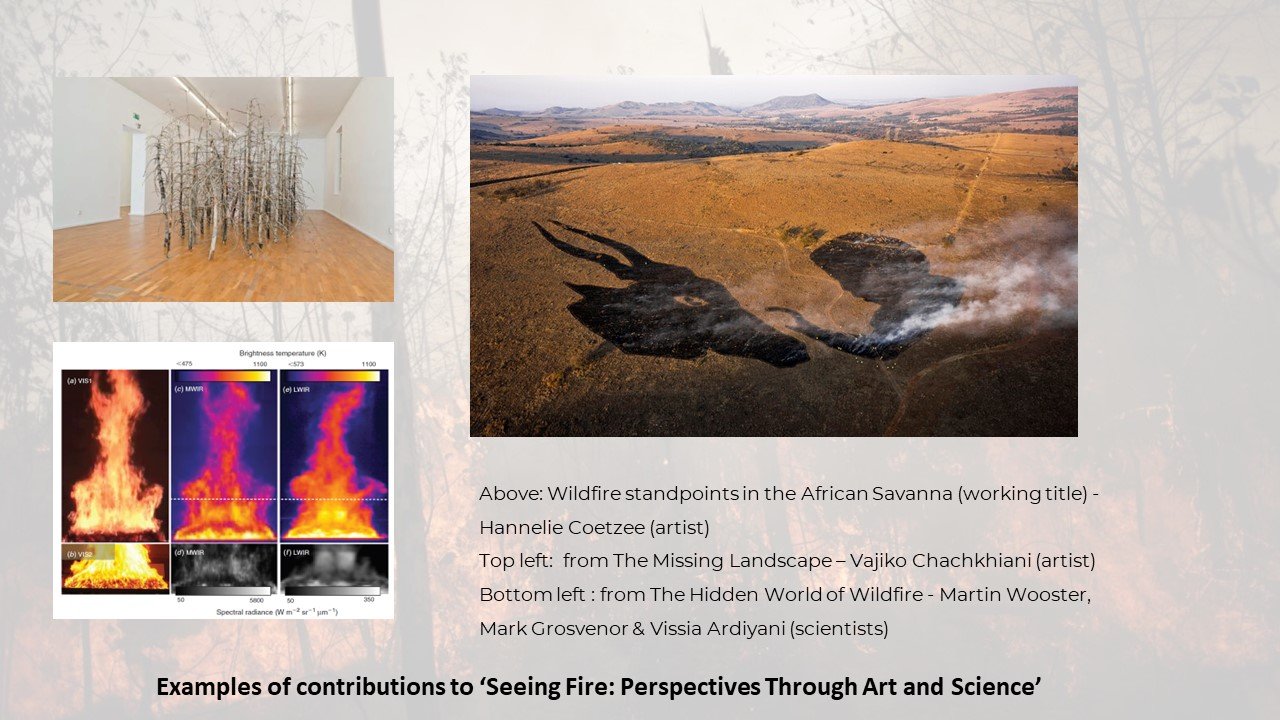
‘Seeing Fire’ was our first activity and output. Following a workshop with our Centre members and a call for contributions from artists, we produced an online gallery titled ‘Seeing Fire: Perspectives through Art and Science’ which showcases works by artists whose practices connect literally and metaphorically with the topic, alongside texts and images by wildfire scientists in the Centre. This project sought to bring these different perspectives together presented side-by-side, with little delineation between the disciplines, and no-hierarchy of knowledge – art and science presented as both different, the same, and as equal. The project also sought to act as a catalyst for Centre members to be engaged in the second phase of the project, where scientists had the opportunity to work with artists from different parts of the world.
2. Wildfires (Working Title) (2020-2021)
This phase of the initiative involved collaborations between selected artists and scientists, for a period of approximately three months, to generate new understandings and thinking around wildfires, presented in the editorial Wildfires (Working Title). The artists and scientists pairings met regularly online to talk about their approaches and practice, what is different and what is similar, how they view and understand wildfires. Each team produced three contributions to the editorial, which included sketches, zoom recordings, poems, sculptures, notes, images and more.
Originally, the title ‘Wildfires (Working Title)’ was temporary, however we decided that ‘working title’ actually reflected the nature of our project – with the emphasis on process and openness rather than an end point or final artwork – and so it became the final title.
A transdisciplinary Creative Learning Lab the following summer then brought together practitioners, scientists and artists to exchange knowledge about the experience of working at the intersection of art and science, and the extent to which this can contribute to new understandings and perceptions around wildfires.
Each artist and scientist gained something different from the project. For example, in a recent event, participant Kapil Yadav, a PhD student at KCL, explained how he feels confined by solely Western approaches in his research. Looking for different ways to understand and think about wildfires that incorporates other parts of his being and spirituality, the project provided him an avenue to do so through artistic approaches, and to do so freely during normal working hours within his PhD studies.
Listen here for a brief reflection on the project (Imperial College podcast).
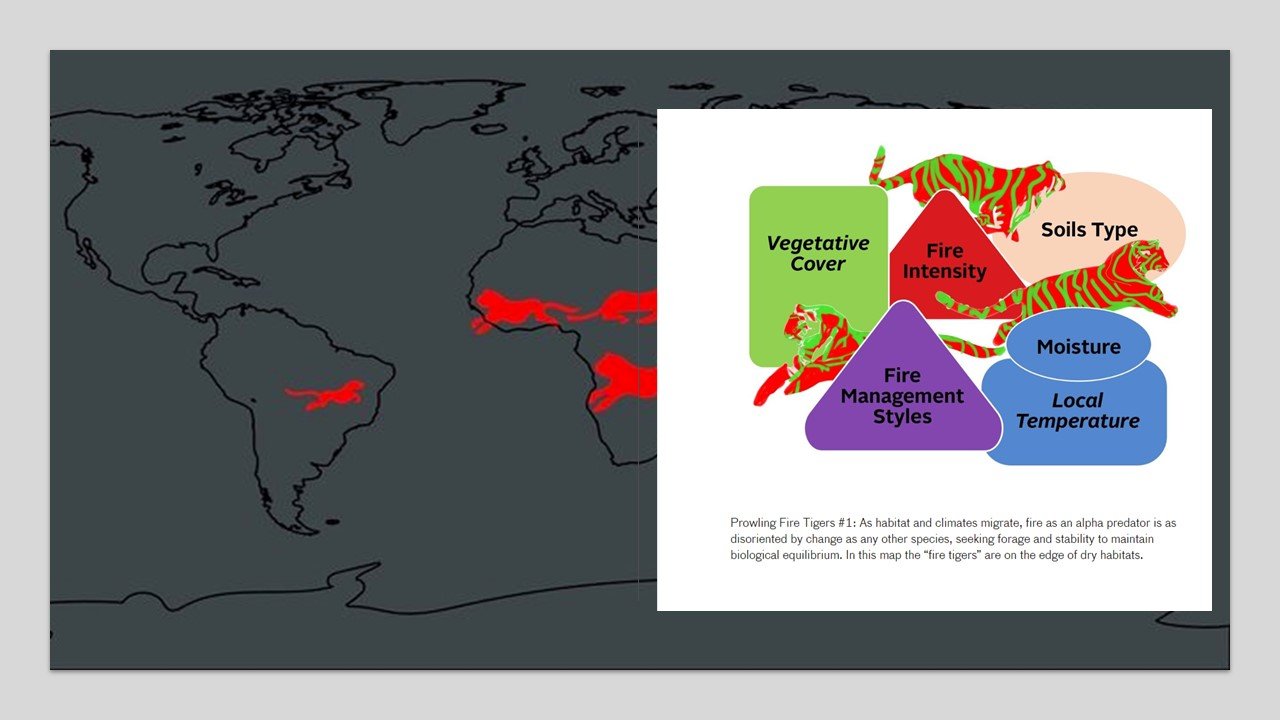
Collage of two images produced by the collaboration between PhD student Olivia Haas, and artist Aviva Rahmani.
3. Stolen Climate: Global Perspectives of Fire on Earth (2021-23)
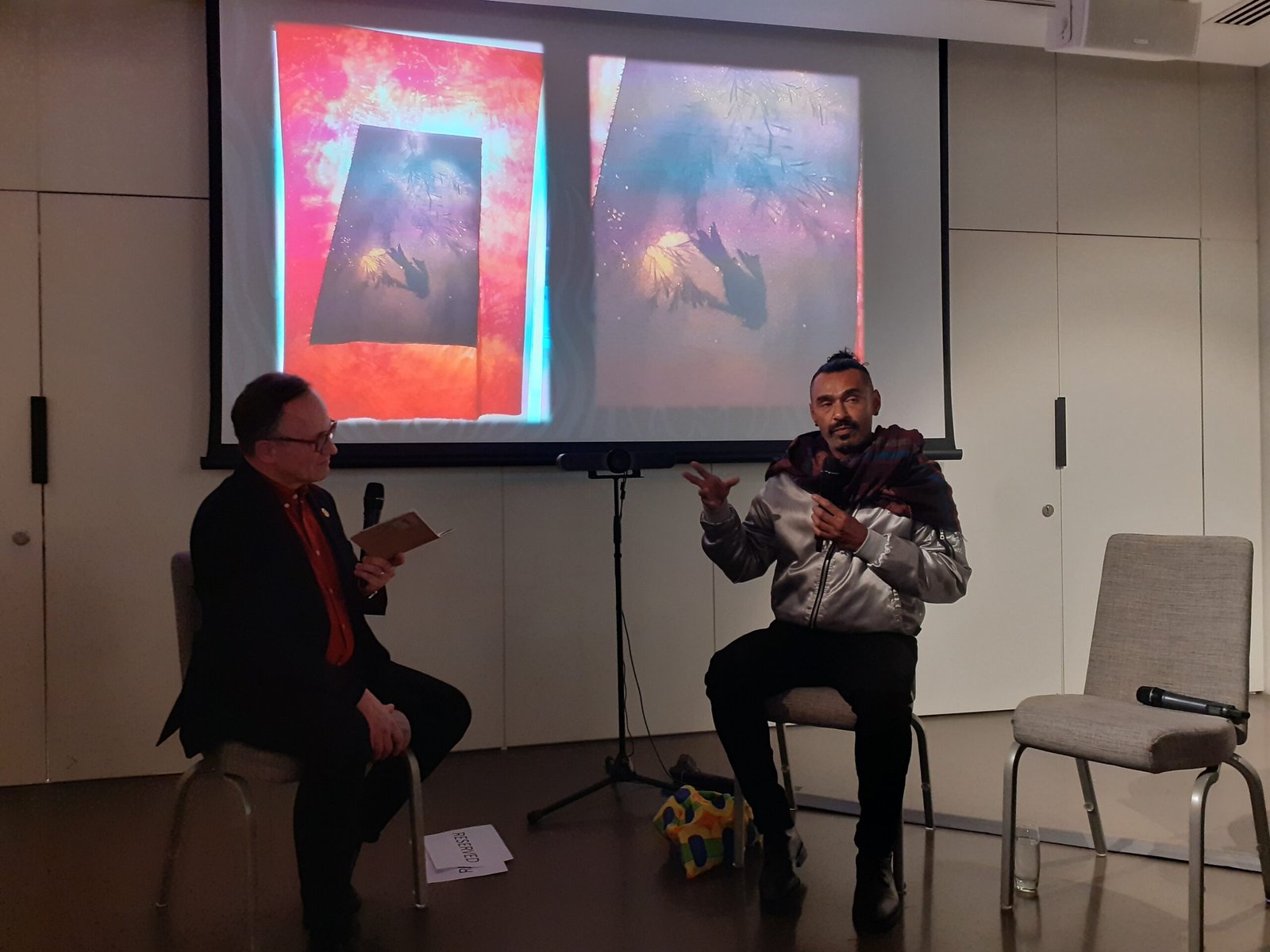
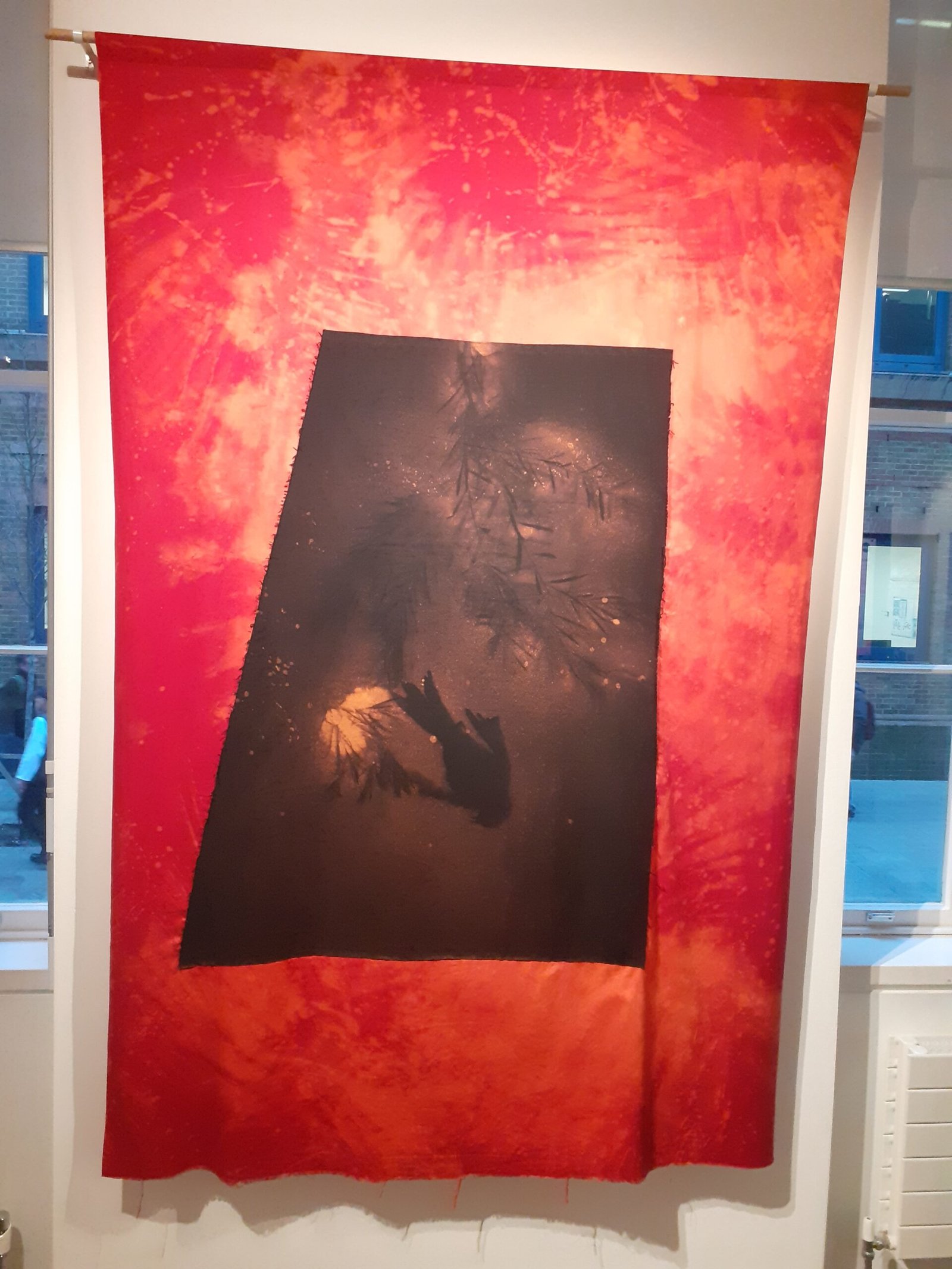
In a new phase of this initiative, we won a KCL Social Engagement grant in 2021, through the Menzies Australia Institute, which was targeted at engaging society in the topic of climate change. We partnered with the Centre of Visual Art at the University of Melbourne to commission an artwork on Indigenous perspectives of fire in Australia, and selected Torres Strait Islander artist, Clinton Naina. The artwork he produced, ‘Stolen Climate’, was part of his “Stolen Unknown” series. The work was presented in London in an exhibition and public programme project titled “Stolen Climate”, for the first time, in March-May 2023 at the Science Gallery London, alongside contributions from Australian filmmaker Tim Georgeson, and from Prof Martin Wooster, professor in Earth Observation at KCL. To launch the exhibition, we organised an afternoon and evening exploring global perspectives of fire on earth, including different scientific perspectives and experiences of working at the art-science interface. Clinton Naina also joined us in person to talk about his practice and Stolen Climate. Read more about the exhibition and the accompanying launch event here.

4. Decolonising Fire Science – engaging with local artists (Kenya)
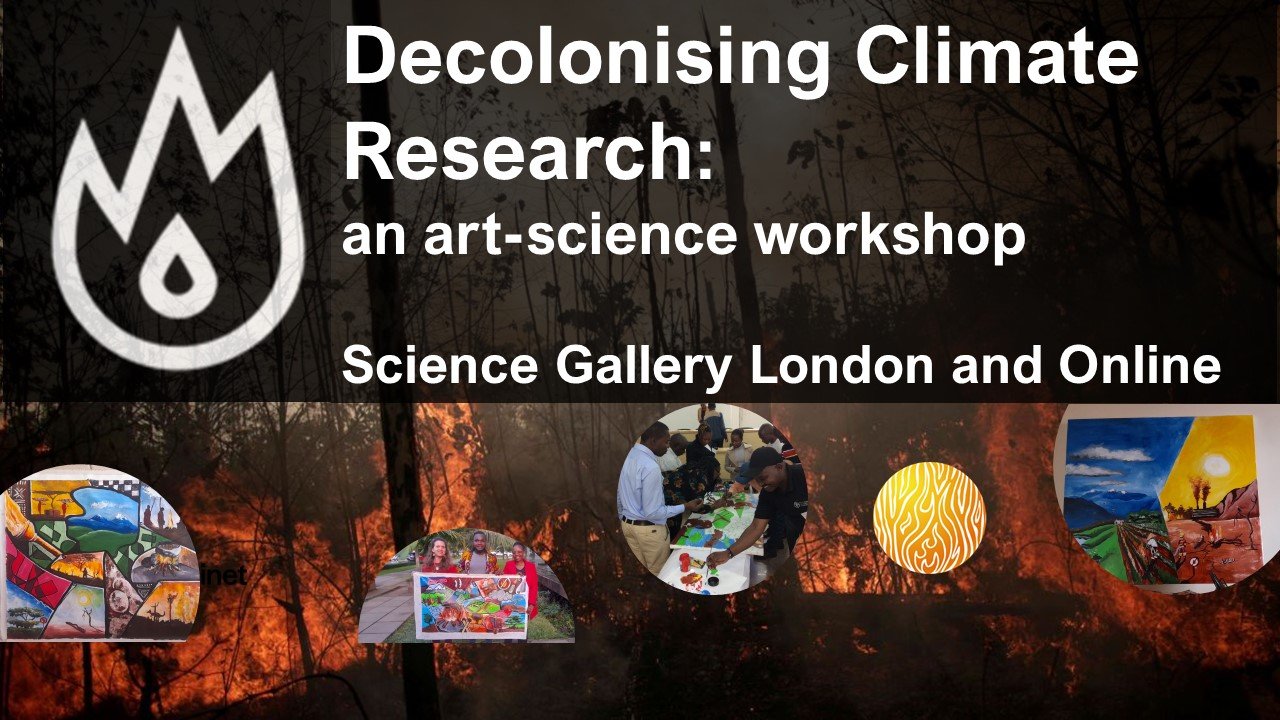
In 2022, our Centre’s EDI Working Group began a series of workshops on decolonising fire science, to explore what this means, and as a Centre, how we can go about this in practice. In December 2022, we held our third workshop, in collaboration with Strathmore University in Nairobi, titled Decolonising Fire Science- Fire Across Contested Landscapes. As part of this workshop, we employed local Kenyan artist Shedrack Musyoki, to produce three artworks – one was a live painting based on what he heard within the workshop, one was a summary piece expressing his own perspectives, and the other was a participatory mural, inspired by drawings made by workshop participants, and to which everyone contributed painting. You can read more about this workshop in English or Swahili. Bringing art into the workshop allowed a novel and engaging way of exploring ideas and perspectives beyond conventional approaches.

We held a public event related to this at the Science Gallery /online on 16th May, exploring approaches to decolonising climate research in science and art, the wildfire paradox, climate justice and participation in live art.
Read more about this, including the two artworks produced titled “Mazingira yetu wajibu wetu – Our environment, Our responsibility” and the creative competition at Strathmore University, “What does climate justice mean to you?
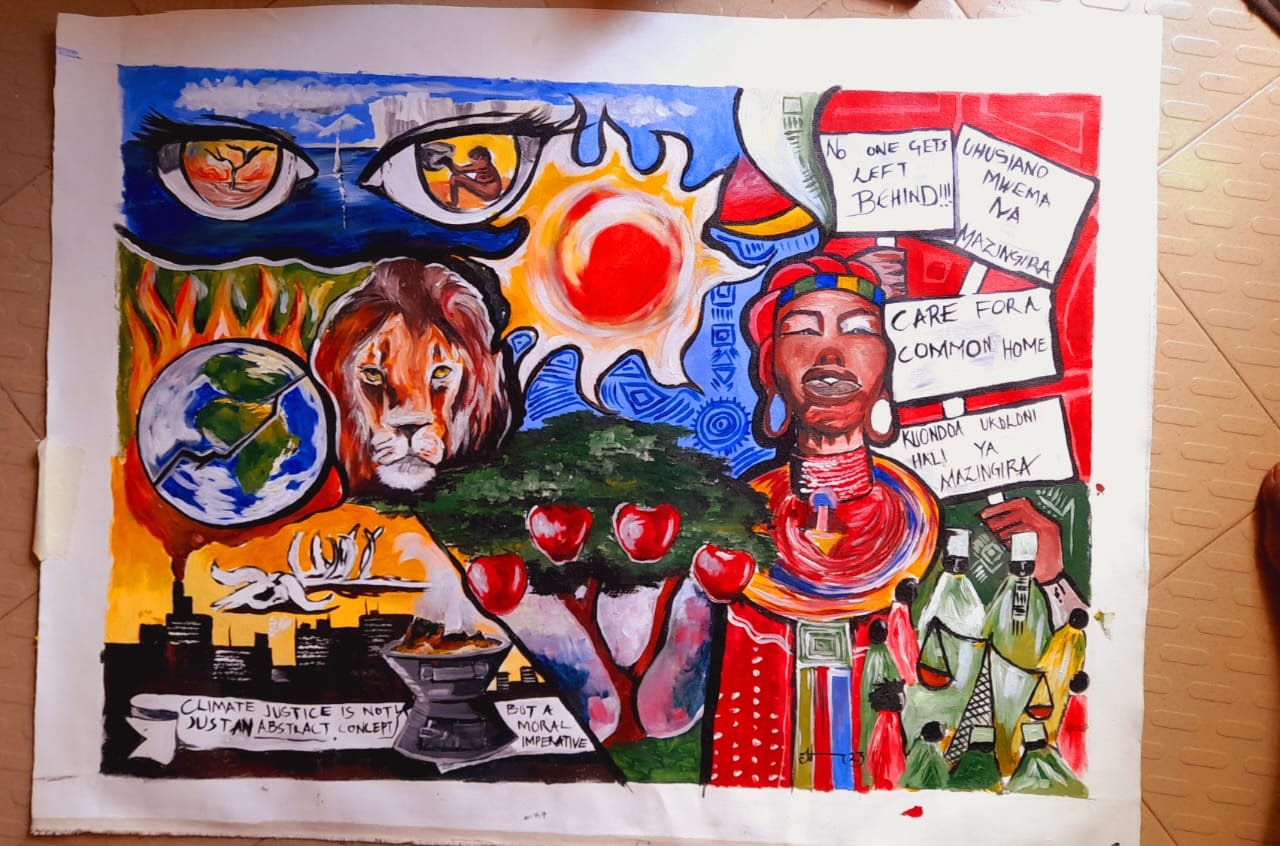
Mazingira yetu wajibu wetu – the Kenyan version of the two paintings produced at the workshop.
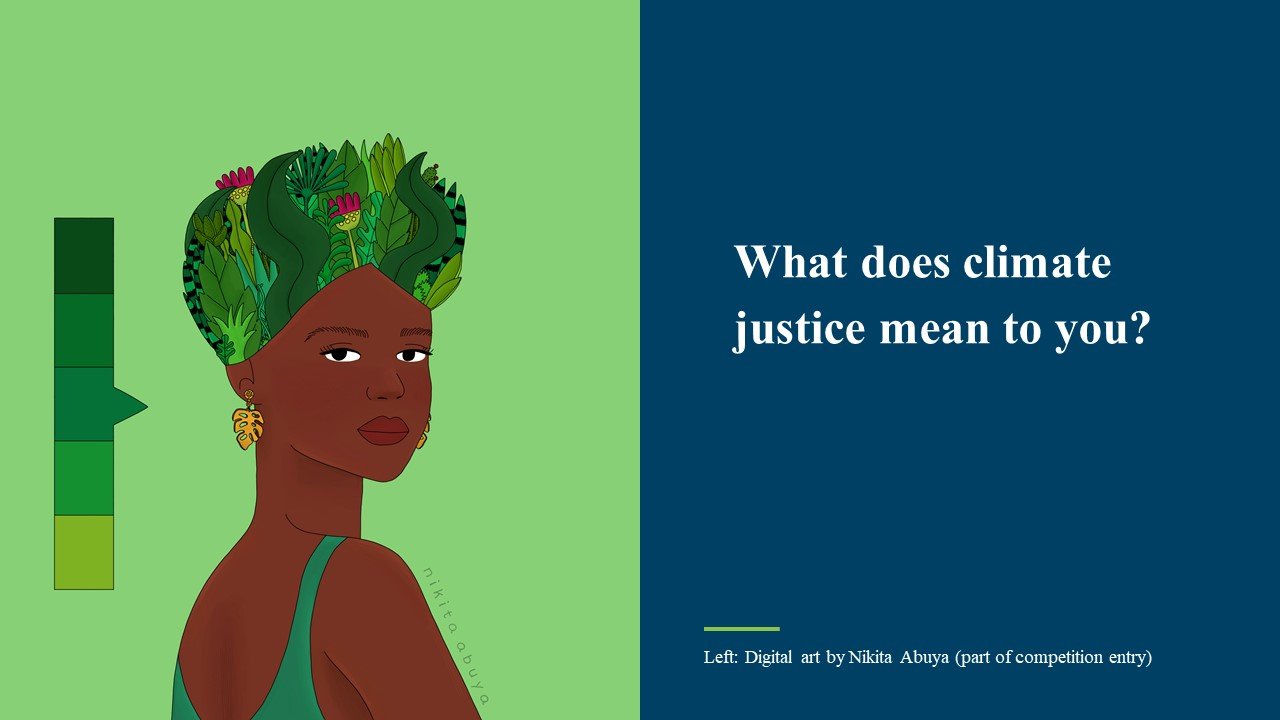
What Does Climate Justice Mean To You? – this image on the left is part of a winning competition entry by Nikita Abuya
5. Wildfires Research Through the Lens
In association with the Leverhulme Wildfires Summer Conference 2023, we ran a competition to find photographs and accompanying narratives that best communicate the impressive work of PhD students studying wildfires from across the world.
We received 13 eligible entries from PhD students studying in the UK, USA, Greece and Switzerland, with photographs taken in Guyana, Kenya, Greece, Italy, Turkey, India, USA, Burkina Faso, France and the UK – a truly global collection.
All entries can be viewed on the competition webpage.
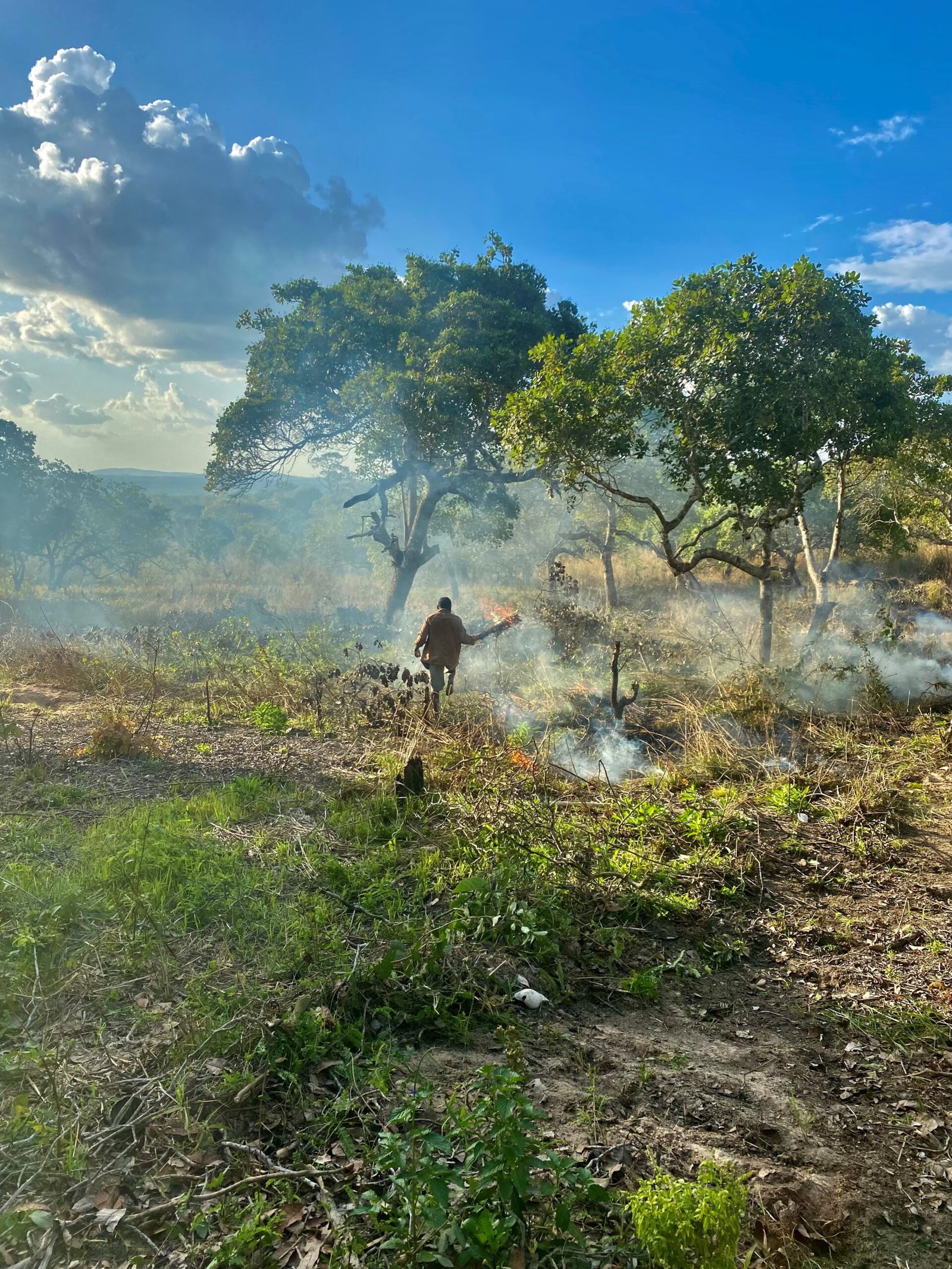
Playing with Fire, by Sophie De Pauw – one of the entries to the competition
Our future projects will be shared here.
For more information about the project, or to discuss ideas to collaborate, please contact project lead, Dr Adriana Ford at a.ford@imperial.ac.uk, or co-lead Svetlana Sequeira Costa the Arts Cabinet at info@artscabinet.org