
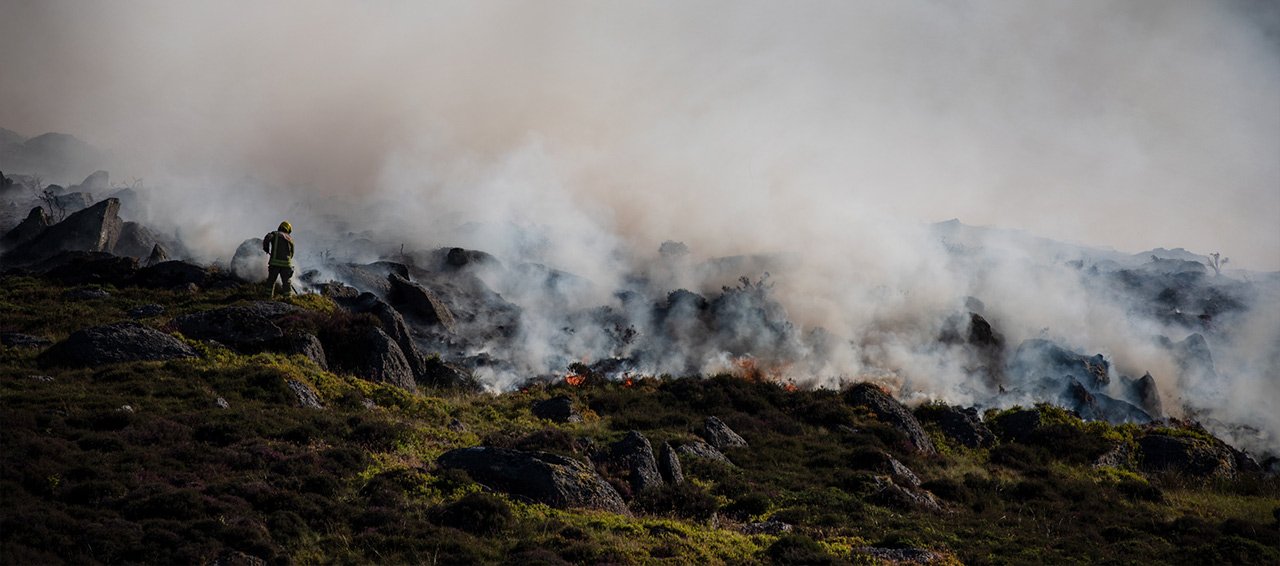
Much of the discussion of the drivers of recent changes in fire regimes has focused on the impact of climate change and anthropogenic activities. However, the direct impacts of changing atmospheric CO2 on plant growth and water-use efficiency could also affect biomass production and hence fuel loads, and therefore influence future fire regimes. The record of changes in fire regimes during intervals of low CO2 in the past provides an opportunity to separate the influence of climate and CO2 on fire regimes, and to test the predictions of fire-enabled dynamic vegetation models about this interplay. This project focuses on the analysis of fire regimes during rapid climate warmings during the last glacial epoch (Dansgaard-Oeschger events) and examines the consequence for biodiversity by comparing these with independent reconstructions of vegetation cover. The findings are applied to assess the likely impact of increasing CO2 for future fire regimes and biodiversity. The project involves analysis of existing palaeoenvironmental databases and fire modelling.
Back to Phase 1
Fire in Global Systems
Phase 1 (2019–24)
CO2 impacts on past and future fire regimes and their consequences for biodiversity
More in Fire in Global Systems
Fire in Global Systems
Quantifying the radiative impacts of African landscape fires across multiple temporal and spatial scales
Fire in Global Systems
Global data collation and analysis of fire practices within smallholder and subsistence-oriented livelihoods
Fire in Global Systems
Palaeofire data and model simulations